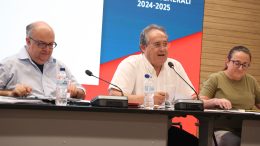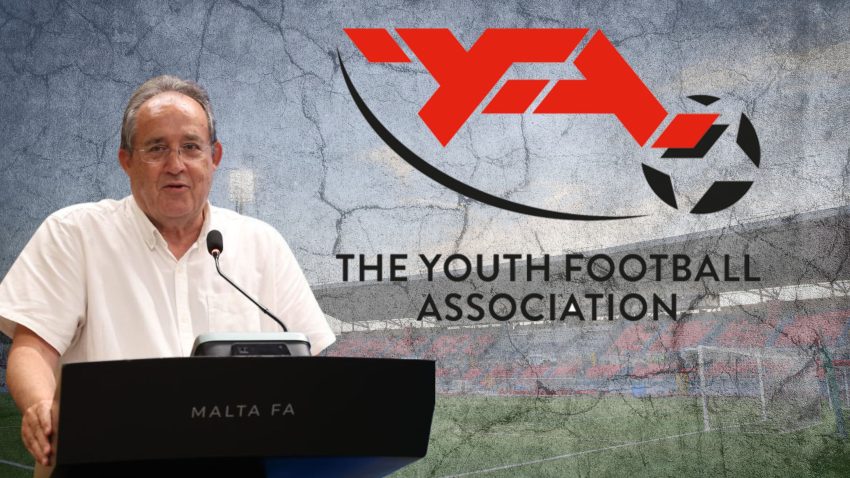
At the Youth Football Association General Assembly held on Thursday, Norman Darmanin Demajo, President of the Youth FA and former two-term head of the Malta Football Association, chose to focus his intervention not on the sweeping reforms aimed at protecting young players but rather on changes to UEFA solidarity fund distribution.
Demajo voiced concern that nurseries outside the Premier League and Challenge League had been negatively affected by the Malta Premier League’s role in administering the solidarity funds. He lamented the lack of consultation with the Youth FA and stressed that the new criteria for the 2024 to 2027 cycle had altered the framework in a way that disadvantaged grassroots football. “These funds are primarily intended to support youth development,” he stated, while criticising the sidelining of the Youth FA in the decision-making process.
While the redistribution of UEFA funds is a relevant issue, the timing and focus of Demajo’s remarks have raised serious concerns. His comments came at the end of a season marred by unprecedented scandal and public outrage over abuses in Maltese youth football, scandals which the Youth FA remained silent on throughout.
During the 2024 to 2025 season, contracts involving minors were leaked, exposing unlawful binding agreements. Screenshots of private chats circulated in media circles. The controversy peaked when the president of a top-flight club, Mosta F.C., George Galea, made a shocking public statement on live television, claiming, “There are female parents who have sexual relations with a coach for their son to play.” The comments caused immediate backlash and disbelief nationwide. “I have a big nursery and see many things. This has been happening for a while,” he added.
Despite such inflammatory and damaging claims and the evidence of systemic abuse, the Youth FA failed to issue a single public statement or condemn the ongoing malpractice. It took the work of a consortium of investigative journalists, in which Malta Sport actively participated, to expose the unethical behaviours entrenched in the registration and transfer of minors, eventually triggering institutional action.
Former Malta international Carlo Mamo was among those to publicly credit the press for pushing the system toward change. He stated that the journalistic probe “helped start the reform,” which culminated in the Malta Football Association introducing a revised registration model. Under the new system, the automatic registration from age 14 to 18 has been dismantled and replaced with a two-step process, covering ages 14 to 16 and then 16 to 18, giving families a better opportunity to evaluate and renegotiate their children’s commitments.
In addition, the MFA introduced a digital player registration form to be handled through the COMET system, addressing long-standing issues of paper-based manipulation and unregulated commitments made behind closed doors. These measures are not superficial changes; they represent a structural response to protect minors from coercion and exploitation in a system that had long favoured clubs and agents over player welfare.
It is in this context that Demajo’s silence becomes deafening. As the President of the Youth FA and a former leader of the MFA, his failure to highlight the reform or even acknowledge the underlying abuses that necessitated it is not just disappointing, it undermines the credibility of the very institution meant to protect young footballers.
While funding structures must be addressed, the choice to ignore sweeping reforms focused on child safeguarding in favour of financial arguments signals a fundamental misalignment in priorities. Grassroots football does not simply need more money; it needs protection, transparency, and leadership willing to confront uncomfortable truths.
With a leadership body that stays quiet amid contract leaks, media scandals, and shocking televised admissions of abuse, one must ask, with such administrations unwilling to call out misconduct, how can youth football in Malta ever truly improve?