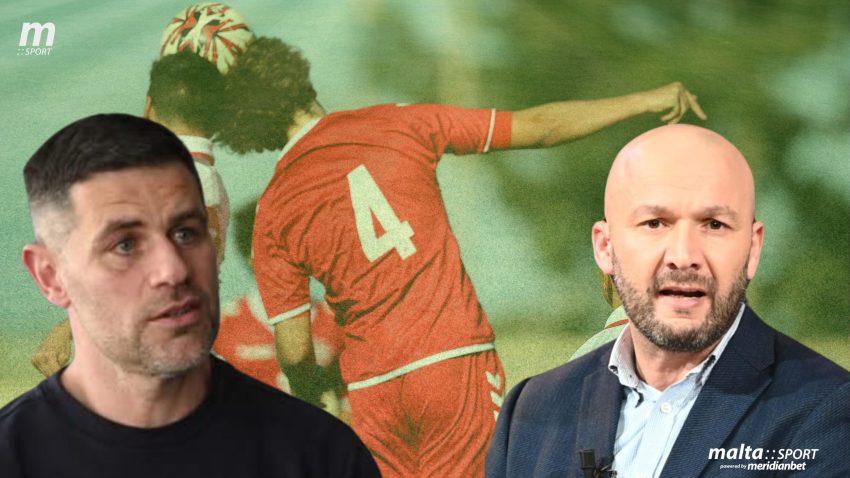
An investigation into youth football transfers, conducted in collaboration with investigative journalist and presenter Antvin Monseigneur and Maltasport.mt together with other contributors, has shaken the foundations of Maltese grassroots football. The inquiry uncovered a pattern of coercion, exploitation, and unethical demands placed on families of young players, some as young as 12, in order to control their club movements.
This long-standing issue, buried for years beneath bureaucratic silence and sporting tradition, exploded into public view following Monseigneur’s tireless reporting. Through televised segments and investigative coverage, he presented leaked chat logs, contracts and first-hand accounts from parents, revealing how some clubs demanded cash payments in exchange for releasing children from their contracts, despite such practices being prohibited under local football regulations.
One such episode included damning WhatsApp exchanges between a youth coach and a parent, where financial “contributions” were requested for a boy to be allowed to switch clubs. In another shocking instance, contracts were discovered bearing the signatures of club presidents and secretaries, signed on behalf of minors. These revelations, made public through Malta Sport’s coverage, shattered the narrative that such events were isolated or exaggerated.

Among the most disturbing moments was the broadcast of a secretly recorded chat in which a youth coach proposed an informal deal with a parent in exchange for game time. The public response was swift and furious. Antvin Monseigneur confronted Malta FA president Bjorn Vassallo live, presenting evidence of systemic abuse. The encounter forced Vassallo to acknowledge that, despite official denials, complaints had been made before.
What was exposed was a transfer system heavily tilted in favour of clubs. Under existing Malta FA rules, once a player registers with a club at age 12, they are effectively tied to that club for a minimum of three years, covering their Under-15 period. Afterwards, they are bound to a further four-year commitment, primarily covering Under-17 and youth league competitions. Any movement requires express permission from the club, and while financial compensation is technically illegal before age 16, many parents found themselves being asked for payments as a precondition to release.
One family told investigators they were asked to pay €5,000 for their son to be allowed to move, even though the boy had barely played that season. Others reported annual payments for kits and training, followed by additional fees demanded during transfer requests. One parent broke down while describing how he was forced to pay nearly €1,000 just to let his son continue playing the sport he loved elsewhere.

Carlo Mamo, General Secretary of the Malta Football Players Association (MFPA), has long campaigned against this system. Since 2016, the MFPA has highlighted how youth players were treated as financial assets instead of children. The union has documented numerous cases where players, seen as surplus by their clubs, were still refused permission to leave unless a fee was paid. Some of these cases reached the Malta FA complaints board, but with little result. In one landmark instance, the case of a 14-year-old player was escalated to the Court of Arbitration for Sport (CAS), following the MFA’s refusal to intervene.
The mounting pressure and media scrutiny eventually pushed stakeholders into action. Following weeks of discussions, the MFPA, Malta FA, and club representatives reached an agreement in principle to reform the current system. Mamo described it as a long-overdue step toward safeguarding young players.
The proposed changes are threefold. First, players cannot be signed to any club before the age of 12 or until the end of their Under-15 competition. This is intended to halt pre-contractual pressure on children and their parents. Second, the previous mandatory four-year commitment post-U15 will be reduced to two years, making it easier for young players to seek opportunities elsewhere. Third, a cap will be introduced on the number of registered players per age group within a club, aiming to prevent hoarding and allowing unused players a fair chance to move.
The reforms are expected to be finalised and adopted in the coming months. They mark a significant shift in how youth football is governed and reflect a growing awareness that children’s rights must come before competitive advantage or club politics.

When asked for a comment, Antvin Monseigneur expressed satisfaction at the change, noting that after months of hard work, pressure, and investigation, this agreement proves the power of journalism in protecting young people and holding institutions accountable. “This is a win for journalistic truth,” he said, “but it is truly shameful that there are still those who believe this was all just a storm in a teacup, or that I was only trying to create a sensational programme. Today’s result shows clearly that what we reported was true, and that the truth has now forced action.”
Mamo also credited the media for its role in bringing the issue to light and emphasised the importance of vigilance. While the reforms are promising, he warned that the MFPA’s goal is to introduce a fair system that safeguards those players who can’t play with a club and would like to move to another club with the current legislation it allows the clubs to impose conditions, including that to receive money from parents and clubs, to let a player move to another team.
Thanks to the efforts of journalists, whistle-blowers, and committed advocates, Malta is now at a turning point, where youth football may finally be rebuilt around the welfare and freedom of its youngest players.