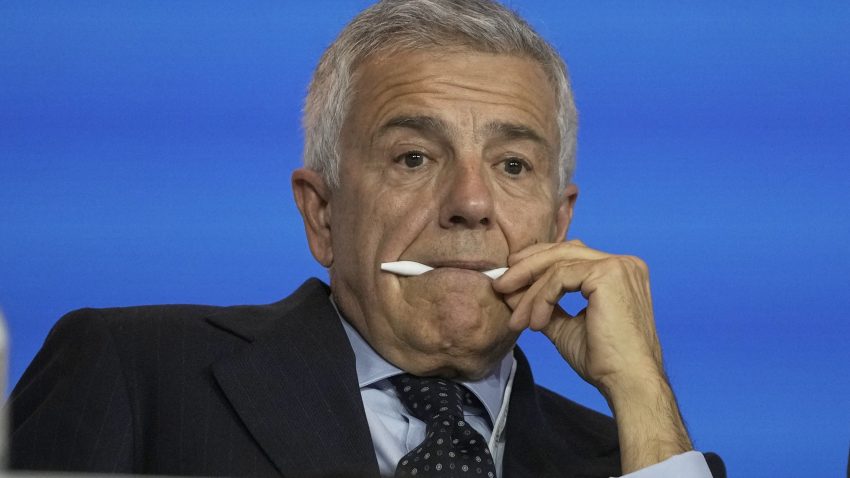
The Vice-President of the International Olympic Committee, Juan Antonio Samaranch Jr., confirmed last week in Madrid that discussions have taken place with FIFA, and did not rule out the possibility of staging the Olympic Games in autumn.
Samaranch, son of former IOC president Juan Antonio Samaranch, outlined the organisation’s ambition to bring the Olympic football tournament closer in stature and format to the sport’s leading international competition. He noted that talks with FIFA officials are already underway and expressed strong confidence that progress will be made.
He made these remarks during a conference organised by LaLiga at the headquarters of the Centro Superior de Estudios de la Defensa Nacional in the Spanish capital.
“From FIFA’s perspective, there are significant expectations regarding women’s and seven-a-side football. We, on our side, would like the senior men’s tournament to more closely resemble the World Cup. While each organisation has its own priorities, I am confident we will make meaningful progress,” Samaranch said.
Several adjustments to Olympic football competitions have already been introduced. The men’s tournament at the Paris 2024 Olympics will be reduced from 16 to 12 teams, while the continued growth of the women’s game has led to an expansion from 12 to 16 teams for the Los Angeles 2028 Olympics.

At the Paris 2024 Olympics, men’s football squads were composed primarily of under-23 players, with only three over-age players permitted—an approach that differs markedly from the FIFA World Cup format. By contrast, this year’s World Cup, hosted jointly by United States, Canada, and Mexico, will feature a record 48 teams.
Also speaking at the event was Javier Tebas, president of LaLiga, who argued against increasing the prominence of men’s football at the Olympics. He warned that such a move would “further overload the calendar, reduce clubs’ revenues and affect players’ rest.” In his view, the Olympic tournament “works well as it is and should not resemble a World Cup.”
Juan Antonio Samaranch Jr. acknowledged that sports such as athletics, gymnastics, and swimming traditionally take centre stage during the Games. However, he emphasised that in terms of ticket sales and overall economic impact, football remains “the biggest sport.” Speaking in Madrid, he also pointed to broader global changes currently under consideration.
“The programme is constantly evolving,” he said. “From June this year, we will outline how the current programme will be evaluated and how it may develop in the future.” Moving beyond football, Samaranch also cautioned that the global sporting calendar “is going to become much more complicated.”
According to Samaranch, global warming and rising temperatures in certain parts of the world could eventually prevent the Games from being hosted in southern regions, but this ‘will change’. He believes ‘there is no doubt’ that one day the Games may change season, moving from summer to autumn.
The IOC vice-president also emphasised how challenging it has become for any country to win a medal, given the increased number of talented athletes worldwide. Consequently, “medals have become extremely valuable’, and Olympic officials now use the number of diplomas earned as a benchmark for evaluating national teams.
Finally, Samaranch was asked about potential bans on countries participating in the Games. He responded that the IOC “has neither the capacity, nor the experience, nor the power, nor the right” to sanction sovereign nations. “You have to be very careful and leave your personal views and principles aside before taking action,” he concluded.