The upcoming Summer Olympics will proceed as planned and be televised, despite the recent devastation caused by wildfires in Los Angeles. This assurance comes from key stakeholders who have been in ongoing discussions with the International Olympic Committee (IOC).
The tradition of broadcasting the Olympics dates back to 1936, when the Berlin Games were aired during Adolf Hitler’s regime. At the time, the Nazi leadership used the event as a propaganda tool to showcase their ideals. A meticulously crafted plan was implemented to highlight what they considered the pinnacle of German aesthetics and values. The impact of those Games, both historically and culturally, is still remembered.
Back then, broadcasting equipment was bulky, scarce, and challenging to maneuver—vastly different from today’s cutting-edge technology. Modern viewers enjoy multiple camera angles, high-definition visuals, and immersive audio, bringing every detail of the competition into homes worldwide. Technological advancements have only amplified the global reach and influence of Olympic broadcasts, with billions tuning in every two years—nearly three-quarters of the world’s population.
The United States, known for its expertise in hosting large-scale events, is preparing to welcome the next Summer Olympics in Los Angeles, the entertainment capital of the world. Expectations for LA2028 are exceptionally high, given the city’s reputation and resources.
However, the catastrophic wildfires that have swept through the region since early January have raised concerns about the feasibility of the Games. The fires have caused significant destruction, burning vast areas of land and displacing more than 50,000 people. Firefighters and first responders continue to battle the flames, with strong winds exacerbating the situation.
Criticism of hosting Olympic events has become increasingly common, fueled by concerns over climate change, social issues, and the politicization of sports—amplified by the intensity of social media debates and declining sponsorships. In Los Angeles, the NOlympics LA movement has voiced strong opposition, arguing that the Games often lead to increased policing, evictions, inequality, exploitation, and a weakening of democracy in host cities.
California Governor Gavin Newsom has faced backlash from residents who believe that public funds earmarked for LA2028 would be better allocated toward rebuilding efforts. The city’s recovery from the wildfires is expected to face significant financial hurdles, adding fuel to the debate over the prioritization of resources.
“Donald Trump, to his credit, was helpful in getting the Olympics to the United States of America, to get it down here in LA. We thank him for that. This is an opportunity for him to shine, for this country to shine, for California and this community to shine, all that opportunity and that pride and spirit that comes not just from hosting those three iconic games and venues, but also the opportunity, I think, to rebuild at the same time,” Newsom told NBC’s ‘Meet the Press’ recently.
NBC has long been the marquee Olympic broadcaster in the United States while Warner Bros. Discovery (WBD) holds the rights to televise the Summer and Winter Games from 2026 to 2032 in 50 European countries, including the United Kingdom, via Eurosport.
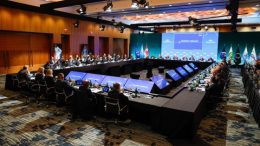
According to a recent report by The Athletic, Scott Young, a group senior vice president of content, production, and business operations for WBD Sports Europe, confirmed on Thursday that the broadcaster has held ongoing discussions with the IOC, which has yet to publicly comment on the matter.
“We have had conversations and there is no noise or discussion right now that it will have any impact on LA 2028,” Young said at a UK roundtable. “The tragedy of these fires in Los Angeles is the focus right now and nobody is looking too far down the road. No infrastructure was significantly impacted, so they are not looking to rebuild anything that was required for the Olympic Games. The priority now is around the people, rebuilding homes and the infrastructure that has been damaged.”
Despite the IOC’s silence, TV rights holder do keep close contact with the Thomas Bach-led organisation and the Olympic Broadcast Service (OBS) in charge of delivering live feeds from the venues, and outline that they have not been given any indication at this time that the event in less than four years is susceptible to a possible cancellation.
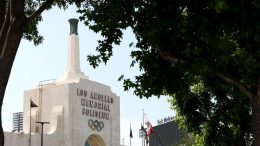
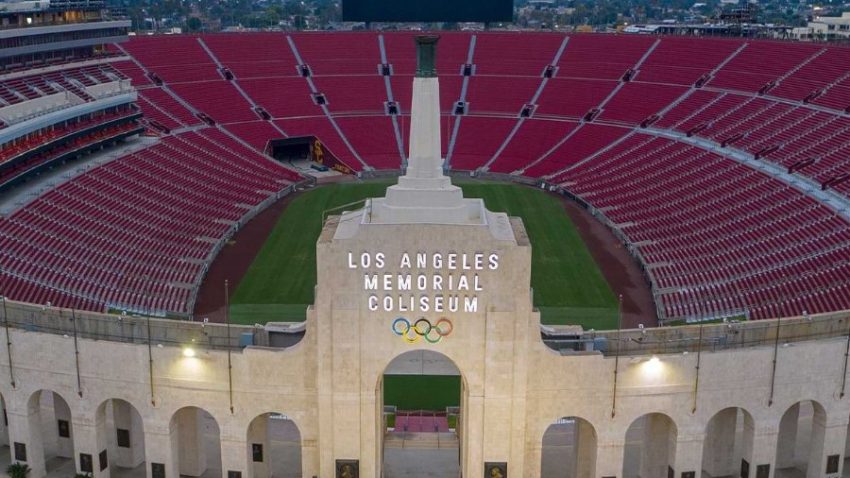
NBC, among others, reported that the Olympic venues had come up unscathed despite the rampant burning of many areas, while organisers have been quick to point out that the Games are expected to go on as planned.
Besides Democratic leader Newsom hailing Trump’s efforts after briefly being considered the Republican’s possible rival in the national stage in 2024, LA 2028’s chairman, Casey Wasserman, met with the newly-elected president at his Mar-a-Lago residence in Florida just 10 days ago and came out confident, stating that they will “deliver a safe and successful Games our nation can be proud of.”
Not unsurprisingly, WBD steered clear of the controversy regarding whether Californian’s state taxes would be better spent on the city’s reconstruction efforts. “That is a discussion for the local organising committee,” Young considered. “We acquire the rights for the Olympic Games and we don’t have a say in where the Olympic Games are held. That’s a debate for those in California and the United States.”
While official word from the IOC has yet to transpire, the dialogue continues with the hope that the fires will be controlled sooner rather than later and officials offer rallying cries of ecouragement. “The strength of our communities and our unity in tough times make this city extraordinary, and when Los Angeles welcomes the world in 2028, our spirit will shine brighter than ever before,” Wasserman predicted.
The last time the city hosted the event in1984 marked the first time than more than half the world’s population enjoyed the competition from afar and, as official Olympics media kits point out “the history of television and of the Olympic Games is special, a kind of alliance in which both parties feed off, complement and inspire one another.”
As the ‘City of Angels’ strives to rebuild, said historic alliance will be put to the test once again. The California fires were televised for everyone to witness live and so will the reconstruction. As for the Games, it remains to be seen, though early indicators seem optimistic.