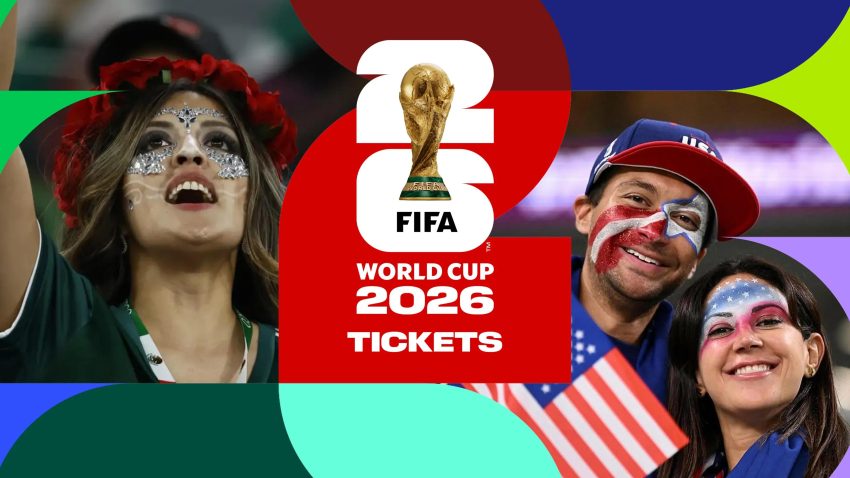
Last week, hundreds of thousands of football fans — including, no doubt, some Original Football readers — spent hours staring at queue screens, trying to buy tickets for a World Cup FIFA promised would be the most accessible in history.
When many finally reached the front, they were met with error messages, rate-limit notices, and prompts to start over. Some waited eight hours. Others had tickets in their cart before being kicked back to the start. Front Office Sports tested the system themselves: after five hours in the queue, they accessed one match before an error appeared, reached a second match before it happened again, and were sent back to the beginning. FIFA declined to comment.

You could frame this as a simple tech failure during high demand. But that misses the real issue. The bigger problem is what fans see when they do get through: final tickets listed at $21,980, group-stage matches priced in the thousands, and FIFA taking 15% from every resale transaction on its own marketplace.
FIFA promised affordability when the North American bid was assembled. Football Supporters Europe says tickets were originally pitched at prices as low as $21. When sales opened in December 2025, the cheapest available tickets were $140. After backlash, FIFA introduced a $60 tier — but capped it at roughly 500 tickets per match and distributed them through federation supporters groups rather than public sale.
Final ticket pricing shows exactly how this model works. In October, final tickets started at $2,030. By April, they had climbed to $10,990, with resale listings pushing beyond $11,000. Some Category 1 prices were so high they looked like pricing errors.
FIFA also sets no price ceiling on its resale platform while taking 15% from both buyers and sellers — meaning it directly benefits when prices rise.
Gianni Infantino argues that the US is “a very special market” used to premium pricing, and that FIFA revenues fund football development across 211 member nations. Both claims are true. But they ignore a key reality: World Cup fans aren’t buying tickets to annual events with predictable supply. This tournament happens once every four years, and many supporters plan years in advance — often from countries where $2,000 is a life-changing expense.
Former Liverpool CEO Peter Moore called the system “dystopian” and an “existential threat to the game,” arguing FIFA’s nonprofit status should serve fans, not maximise tournament revenue.
Meanwhile, costs keep rising beyond tickets. NJ Transit is charging $150 round-trip to MetLife Stadium, while Boston’s MBTA will charge $80 for Foxborough travel. Philadelphia has taken the opposite approach, making public transport free on matchdays.
Members of Congress this week asked FIFA to cover transit costs, pointing to its projected $11 billion in tournament revenue. FIFA responded that the figure isn’t profit and will be reinvested — technically true, but unlikely to reassure fans who spent eight hours in a queue for tickets they still can’t afford.
This doesn’t feel like miscalculation. It feels deliberate: a pricing strategy where the financial upside outweighs the backlash.
Football has always balanced commerce with accessibility — or at least tried to. What feels different about 2026 is that FIFA has stopped pretending to strike that balance and is now applying the same extraction model it once criticised in secondary markets, only through its own platform.
The stadiums will still be full next summer. But many seats may be occupied by corporate buyers, wealthy casuals, and speculators rather than the supporters who built the tournament’s atmosphere.
Peter Moore said he hopes enough fans are there to create an atmosphere. For the biggest World Cup in history, that feels like a remarkably low bar.