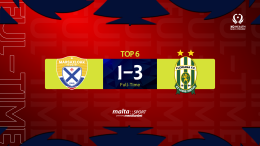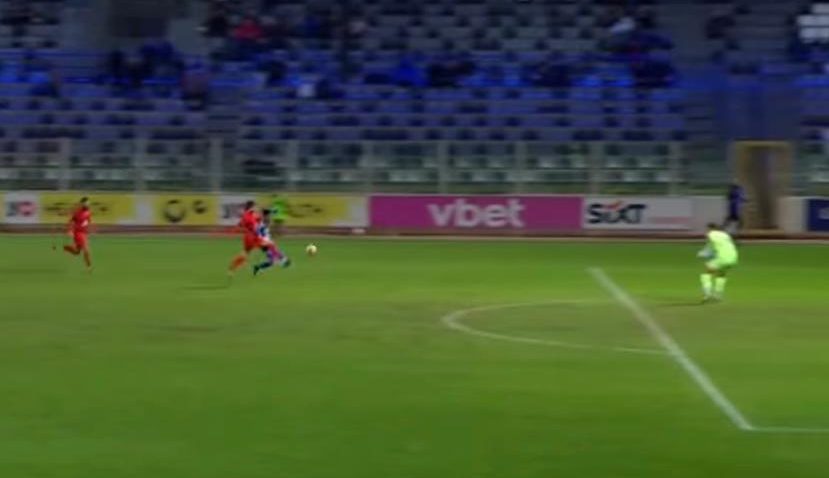
The incident in the 72nd minute of the match between Ħamrun Spartans and Sliema Wanderers, officiated by Ishmael Barbara, sparked widespread debate, with many questioning whether Vincenzo Polito should have been shown a red card following his challenge on Marcelo Santos.
In the immediate aftermath of the match, we deliberately put this incident forward to our readers and followers as a point of discussion. The aim was to reflect the real time uncertainty that often surrounds such decisions and to encourage healthy debate among supporters, players, and officials alike.
Having since reviewed the footage carefully and analysed the action against the official IFAB Laws of the Game and their interpretations, we are now explaining why the decision taken on the field was the correct one. Our objective is not to dismiss differing opinions, but to provide clarity based on the written law and its application, using objectivity rather than emotion or team bias.
There is no dispute that a contact occurred. The decisive factor, however, lies in the timing of the contact. The challenge by Polito takes place after Santos had already attempted a shot at goal, a detail that is crucial when assessing whether DOGSO can apply.
DOGSO can only be considered when a foul denies an obvious goal scoring opportunity. In this case, the opportunity was not denied, as the attacking player had already completed his attempt. Once the shot is taken, the attacking phase has concluded, and any subsequent contact cannot be interpreted as preventing the chance itself.
This same reasoning explains why a yellow card would also be inconsistent. A caution for stopping a promising attack applies when a defender halts the development of an attacking move before a chance is created. Here, the attack was not stopped prematurely, as the attacker was able to complete his action.
Revisiting the four DOGSO criteria reinforces this interpretation. While distance to goal and direction of play were present, the likelihood of control becomes irrelevant once the shot has been taken, as control has already been exercised. As a result, not all criteria can be fulfilled at the decisive moment.
This analysis reflects our wider editorial approach, which aims to educate readers by examining controversial decisions through the lens of the official IFAB Laws of the Game, ensuring that debate is informed by accuracy, context, and objective interpretation.