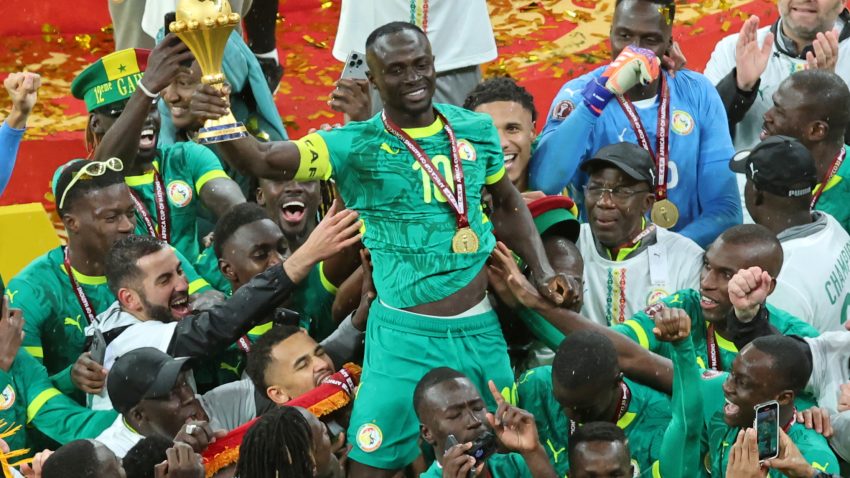
Senegal have confirmed they will appeal to the Court of Arbitration for Sport after CAF’s Appeal Board stripped them of the 2025 Africa Cup of Nations title and awarded the final to Morocco by a 3-0 forfeit. CAF announced on 17 March that Senegal had infringed Articles 82 and 84 of the competition regulations, overturning the original 1-0 result from the final in Rabat.
Communiqué de la FSF relatif à la notification de la décision rendue le 17 mars 2026 par le Jury d'Appel de la Confédération Africaine de Football (CAF). 👇 pic.twitter.com/b0xxQsMQWU
— Equipe du Sénégal (@GaindeYi) March 18, 2026
The Senegalese Football Federation reacted furiously to the decision, describing it as “unfair, unprecedented and unacceptable”, and said it would move the case to CAS in Lausanne. Reuters also reported strong criticism from federation officials, who argued that the ruling lacked a proper legal basis and damaged the credibility of African football.
At the centre of the dispute are the chaotic scenes late in the final, when Senegal’s players temporarily left the pitch in protest after Morocco were awarded a penalty following a VAR review. Reuters reported that the walk off lasted around 14 minutes before Senegal returned, Morocco missed the penalty, and Senegal eventually went on to win 1-0 after extra time.
CAF’s Appeal Board later ruled that the conduct of the Senegal team fell within the scope of Articles 82 and 84, set aside the earlier disciplinary decision, and declared Senegal to have forfeited the match, with the result officially recorded as 3-0 in Morocco’s favour. The same ruling also adjusted several other sanctions linked to the disorder, including reducing some Moroccan penalties while upholding others.

Senegal’s likely argument at CAS will be that such a determination should have been made on the field by the referee at the time, not retroactively after the match had been completed. That is an inference from the legal position reported around the case rather than a formal CAS filing at this stage, but it appears to be central to the federation’s challenge.
Morocco, meanwhile, have said throughout that their appeal was not aimed at disputing the sporting quality of the teams involved, but at ensuring the regulations were properly applied. The result is one of the most extraordinary twists in modern AFCON history, and the final outcome now looks set to depend on what happens next in Lausanne