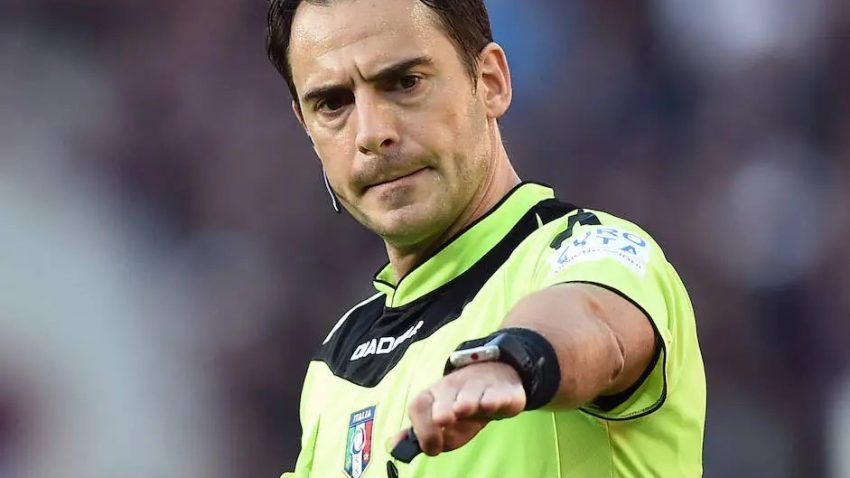
Former Serie A referee Claudio Gavillucci has claimed that the crisis engulfing Italian refereeing is not simply a revolt against Gianluca Rocchi, but a wider rebellion against a system that, in his view, has failed to protect match officials and guarantee real independence.
Speaking as the Milan investigation into alleged sporting fraud continues to shake the Associazione Italiana Arbitri, Gavillucci said the anger emerging from within refereeing circles should not be read only as a personal attack on Rocchi, who is under investigation and has stepped back from his role. Instead, he described it as the result of years of internal frustration, insecurity and lack of contractual safeguards for referees.
Gavillucci, who was removed from the refereeing ranks in 2018 for what were described as “motivated technical evaluations”, remains one of the most outspoken former officials in Italian football. His dismissal came shortly after he suspended Sampdoria against Napoli following racist abuse directed at Kalidou Koulibaly, although he has stopped short of directly claiming that the decision caused his removal.

His intervention now adds another layer to an already explosive situation. The Milan probe, led by prosecutor Maurizio Ascione, has reportedly examined alleged interference in VAR operations and questioned several refereeing figures. Gavillucci said no one should interfere with referees or VAR officials during matches, recalling that when he worked with VAR, officials operated under strict instructions to close themselves off before kick-off and reopen only after the final whistle.
He also argued that the real problem is structural. Referees, he said, are expected to behave like professionals but are not given the protections of professional workers. According to Gavillucci, Italian football must introduce proper contractual safeguards, including protection in case of injury and end-of-service rights. Without such reform, he warned, further legal disputes could follow.
On Rocchi himself, Gavillucci offered a more balanced view. He described him as a serious professional, both as a former referee and as a designator, and said he believes Rocchi will eventually emerge clean from the case. However, he also said that the technical results under his leadership have not been satisfactory.
Gavillucci also addressed the controversial issue of so-called “combined” or managed designations. He said it is normal for a referee who has made a mistake involving a particular team to be kept away from that team for a period of time. In his view, such decisions can fall within the discretion of a designator, similar to how a coach manages players psychologically. Whether that practice could ever become legally relevant, he said, is not for him to decide.
The former referee’s comments point to a deeper question now facing Italian football. This is no longer only about one investigation, one designator or one VAR incident. It is about whether the refereeing system is independent enough, transparent enough and fair enough to withstand public and judicial scrutiny.