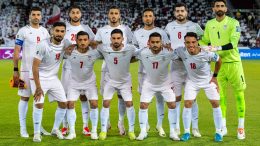
Iran secured qualification for the 2026 FIFA World Cup, becoming the sixth nation to book its place in the expanded tournament set to take place across the United States, Canada, and Mexico. Team Melli earned their ticket after a dramatic 2–2 draw against Uzbekistan at the Azadi Stadium in Tehran, thanks to a brace from Inter striker Mehdi Taremi. The result ensured Iran a top-two finish in Group A of the third round of AFC qualifying, confirming their fourth consecutive World Cup appearance and seventh overall.
While the achievement marks a moment of pride for Iranian football, its significance is now clouded by a surge in geopolitical tensions. The worsening relationship between Iran and the United States, sparked in part by recent American airstrikes on Iranian targets, has raised concerns about the feasibility of Iran’s participation in a tournament hosted predominantly by a country with which it has no diplomatic ties.
These tensions are already having real-world implications. Mehdi Taremi, the national hero of that decisive qualifier and a high-profile summer signing for Inter, was due to participate in the FIFA Club World Cup with his new club. However, due to the recent rise in hostilities and travel restrictions, Taremi has been held in Tehran and has not been able to leave the country. His absence from the global tournament is not only a blow to Inter but a stark reminder of the unpredictable impact that geopolitical crises can have on sport and individual athletes.
The situation has presented FIFA with an unprecedented dilemma. Iran has qualified fairly through sport but may find itself unable to participate due to hostile political circumstances. Sources such as The Guardian have reported that FIFA is actively reviewing the implications of this scenario and assessing how to accommodate a qualified team that may face legal and logistical obstacles in entering the host country.
FIFA has a history of suspending teams from major competitions due to international conflict. Russia was suspended indefinitely following its invasion of Ukraine, and Yugoslavia faced exclusion during the Balkan Wars in the 1990s. Although there has been no official indication that Iran faces suspension, such a decision cannot be ruled out, especially amid speculation that FIFA President Gianni Infantino may come under political pressure from the US administration.
The political backdrop complicates matters further. On 20 January 2025, former President Donald Trump, now back in office, signed an executive order imposing stringent visa restrictions on citizens of 41 countries, including Iran. The order, justified on national security grounds, could prevent Iranian fans from travelling to the United States. Even the players and staff may face hurdles, despite the possibility of sports-related exemptions.
The structure of the tournament itself adds more complexity. Only the third-place finisher in Group A will play all of its group matches in Mexico. All other teams are expected to play at least one group stage game in the United States. This means that Iran would almost certainly be required to enter US territory at some stage of the competition. Should they reach the knockout rounds, venues such as Miami would be unavoidable.
The situation evokes memories of the iconic match between Iran and the United States at the 1998 World Cup in France, a game remembered not just for its sporting significance but also as a rare moment of respectful diplomacy between two rival nations. Today’s atmosphere, however, is far more strained and less receptive to symbolic gestures.
FIFA must now weigh its core values of inclusion and universality against the reality of international politics. Infantino previously defended Iran’s participation in Qatar 2022 as a testament to football’s unifying power. That principle now faces its sternest test yet.
For Iranian football, the moment is bittersweet. The players, coaches, and fans have earned their place on football’s grandest stage, yet their path is threatened by forces beyond the sport. The next few months will reveal whether Iran can realise its World Cup dream or whether global tensions will once again overshadow the beautiful game.