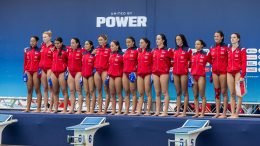
Less than a day after the Aquatic Sports Association’s Arbitration Board ruled in favour of Jake Muscat’s reinstatement, the water polo player was seen back at Neptunes WSC’s training complex. On the surface, it seemed as though the club had respected the ruling. However, various videos of the training session, received by Maltasport.mt, tell a different story. What was meant to mark a return to normality may now be fuelling a fresh controversy.
The ASA’s ruling delivered on 16 June clearly stated in Paragraph G.4 that “until any transfer agreement is reached between Neptunes and Muscat, the club is directed to consider him fully eligible, to call him for training with the senior team, and to ensure he receives all benefits granted to any other registered player.” This directive followed a lengthy arbitration process, during which Neptunes had accused Muscat of disciplinary issues, while the player and San Ġiljan ASC argued that he was being unfairly isolated and penalised. The Arbitration Board did not terminate his contract, but it did strike down a €3,000 fine and reaffirmed that Muscat was to remain a senior player in good standing.
However, video material obtained by MaltaSport.mt from the first session following the ruling shows a very different picture of what unfolded at the Neptunes training session. In multiple clips, Muscat is seen sidelined apart from the rest of the senior squad, not participating in any drills, and observing from the side of the pool. He is not seen engaging in warm-ups, set plays, or team tactics. Instead, he remains passive and disconnected from team activity. In later footage, Muscat is shown for a brief period interacting with youth players, not with the senior team he was officially ordered to rejoin.
The presence of Muscat at the session may technically fulfil the order to “call him to training,” but his visible exclusion from active participation raises questions about whether Neptunes is truly complying with the intention of the ruling. Observers within the local water polo community have called it a textbook case of formal compliance with no substantive reintegration. These concerns are reinforced by the fact that all the video evidence reviewed by Maltasport.mt consistently shows the player sidelined and uninvolved throughout the session.
The ruling mandates training with the senior team; therefore, it implies full participation in drills, tactical preparation, and team bonding. Having Muscat sit poolside or involve him briefly with youth players may allow the club to claim technical obedience, but it also risks violating the very spirit of the decision.
What remains unclear is how the ASA plans to enforce the ruling. The association has not made any public comment on the footage. There appears to be no direct mechanism for oversight or disciplinary action should a club find subtle ways to avoid proper implementation. That raises wider concerns about the ASA’s ability to guarantee player protections in future disputes. If a ruling can be interpreted loosely and manipulated through passive non-cooperation, then the very credibility of arbitration as a conflict-resolution mechanism comes under threat.
The Muscat case is now evolving into a broader debate about enforcement. If various training session videos continue to show a player formally recalled but practically excluded, what recourse does the player have? Is there space for further arbitration? Or will this quietly become the norm, rulings obeyed on paper, but ignored in practice?
As more footage circulates and as players and coaches speak privately about what they witnessed, pressure is building. The ASA may soon be forced to step in again, not with another ruling, but with real enforcement. Until then, maltasport.mt will continue monitoring developments and verifying any further footage from upcoming training sessions.
What was meant to be a resolution is now turning into another chapter in a case that refuses to go away.