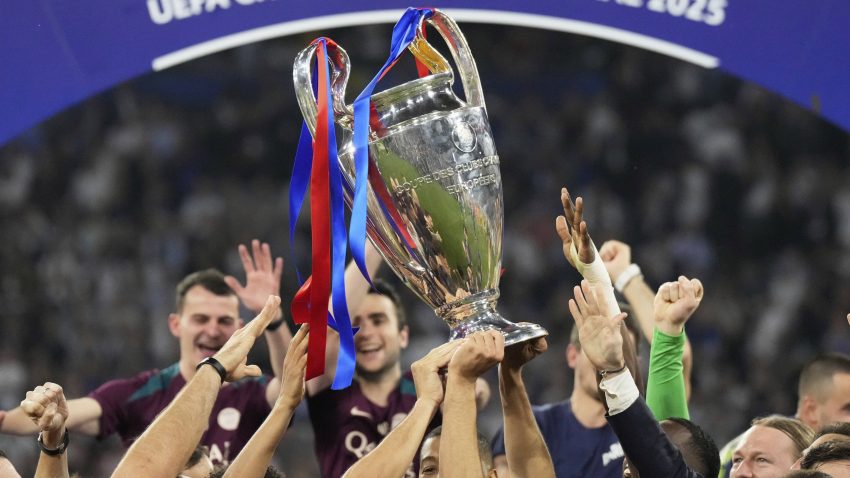
The UEFA Champions League returns this week as the famous anthem echoes across Europe once again. The 2025-26 competition begins with 36 teams competing under the expanded league format introduced last season. Paris Saint-Germain entered as defending champions after claiming their first European Cup in a stunning 5-0 final win last spring. The question now is whether PSG can repeat that triumph, something no club outside Real Madrid has managed in the Champions League era or if a new champion will rise in Budapest next May.
Opening Matches of Matchday 1
The action kicks off across three nights of fixtures in the new league phase. Notable Matchday 1 clashes include:
- PSV Eindhoven vs Union Saint-Gilloise
- Athletic Bilbao vs Arsenal
- Juventus vs Borussia Dortmund
- Benfica vs Qarabağ FK
- Tottenham Hotspur vs Villarreal
- Real Madrid vs Marseille
- Olympiacos vs Pafos
- Slavia Praha vs Bodø/Glimt
- Bayern Munich vs Chelsea
- Paris Saint-Germain vs Atalanta
- Ajax vs Inter Milan
- Liverpool vs Atlético Madrid
- Copenhagen vs Bayer Leverkusen
- Club Brugge vs Monaco
- Eintracht Frankfurt vs Galatasaray
- Sporting CP vs Kairat Almaty
- Newcastle United vs Barcelona
- Manchester City vs Napoli
These opening games set the stage for a long road to the final. All eyes are on PSG as they begin their title defence, but a host of Europe’s heavyweights are lining up as potential threats to the French side’s crown.
Favourites to Stop PSG’s Title Defence
Pre-tournament predictions from Opta’s AI-powered supercomputer rank several clubs ahead of PSG in the race for the 2025-26 Champions League title. According to the data, Liverpool have the highest probability of lifting the trophy at 20.4%, followed by Arsenal at 16.0%. Reigning champions PSG are rated third-favourites with a 12.1% chance of retaining their title. Other leading contenders include Manchester City and Barcelona (each given an 8.4% chance), with Chelsea (7.0%), Real Madrid (5.8%) and Bayern Munich (around 4%) rounding out the chasing pack. These figures underscore an open field; no single team is overwhelmingly expected to dominate, setting the stage for a wide-open tournament.
Liverpool

It may come as a surprise that last season’s round-of-16 casualty is now the favourite, but Liverpool’s consistency and squad strength explain their 20.4% title probability, The Reds were the top performers in the 2024-25 league phase, winning 7 of 8 matches to finish first in the 36-team table (21 points). However, their campaign was cut short by PSG in the first knockout round. Under manager Arne Slot, the reigning English champions are tipped by Opta’s model to go deep again, thanks in part to greater depth across the roster. Liverpool have reinforced their attack by signing Swedish striker Alexander Isak on deadline day, adding to an offence already spearheaded by Mohamed Salah and Darwin Núñez. In midfield, new arrivals and emerging talents have given them a strong rotation at virtually every position. This depth could prove crucial in a long season; an early injury to a star (such as Virgil van Dijk) would hurt any team, but Liverpool appears better equipped than most to cope. If Slot’s side hit top form, their combination of Premier League-tested mettle and European pedigree makes them a prime candidate to end PSG’s reign.
Statistically, Liverpool’s dominance last autumn was clear: they won all four home games in the league phase by a combined 10-1 score, even defeating then-holders Real Madrid at Anfield. Such performances underline Liverpool’s ability to beat elite opponents. The challenge will be carrying that form into the knockout rounds and avoiding another premature exit. Having lifted the Champions League as recently as 2019, Liverpool know what it takes to go all the way – and the data suggests they have a strong chance to do so again.
Arsenal

Arsenal have re-established themselves among Europe’s elite and enter this season as the second-favourites per Opta, with a 16.0% chance to finally become European champions. Mikel Arteta’s Gunners made a breakthrough last year by reaching the semi-finals (their best run since 2009), before falling to PSG 3-1 on aggregate. It was a bitter end, but also a sign of progress for a club that hadn’t been this deep in the competition in over a decade. Now Arsenal will look to take the next step and end their long wait for a Champions League crown – they have contested 211 matches in this tournament without ever winning it, the most of any club.
The current Arsenal squad is a balanced blend of youthful talent and experience. Arteta’s team has been built on an excellent defence – they have conceded just 18 goals in 24 Champions League matches under his management, a record comparable to some of the great defensive sides of the past. That solidity gives Arsenal a platform in any two-legged tie. Over the summer, the Gunners also invested heavily to strengthen their squad depth. Notably, they brought in Swedish striker Viktor Gyökeres (for a club-record fee) to add goals up front, and Spanish midfielder Martin Zubimendi to anchor the midfield, signings that Gary Neville and other pundits have hailed as potentially transformative for the team. These additions, alongside established stars like Bukayo Saka, Martin Ødegaard and Declan Rice, mean Arsenal can field a formidable lineup and have quality in reserve.
Arsenal’s challenge will be translating their domestic momentum into European success. Last season they eliminated Real Madrid in the quarter-finals with an impressive 5-1 aggregate, signaling that they can topple the continent’s traditional giants. If they maintain their defensive stinginess and get the best out of their new signings in attack, Arsenal could very well be the team to thwart PSG’s repeat bid. The Opta supercomputer’s confidence in Arsenal suggests that their long-awaited European glory is within.
Barcelona

Barcelona come into this Champions League campaign with something to prove, and the firepower to do it. The Catalans were arguably the most exciting side in last year’s tournament: they scored 43 goals in 14 UCL games (3.1 per match), the highest of any team in 2024-25. Only one team in Champions League history (Barça themselves in 1999-00) ever scored more in a single. Led by prodigious winger Lamine Yamal, Barcelona’s attack ripped defences apart until a heartbreaking semi-final exit against Inter Milan. That defeat, sealed in the dying seconds of extra time denied Barça a dream final against PSG, but it reinforced the sense that Barça are back as a European force.
Under coach Hansi Flick, who has a remarkable Champions League managerial win rate of 78%, Barcelona have a swashbuckling style. Flick’s attacking philosophy unlocked a young frontline last season, and now he has even more weapons at his disposal. Over the summer, Barça added English star Marcus Rashford on loan from Manchester United and signed 19-year-old Swedish talent Roony Bardghji to bolster the forward line. These newcomers join Yamal, an 18-year-old widely regarded as one of the world’s best players and the likes of Pedri, Gavi, and João Félix to form a fearsome array of attacking options. In goal, Barcelona addressed a weak point by acquiring Joan García from Espanyol, a highly rated keeper who has already stepped into the starting role with Marc-André ter Stegen sidelined. With their return to a rebuilt Camp Nou later this season, Barça will also regain the advantage of their true home stadium, which could lift them further in big European nights.
Opta’s model gives Barcelona about an 8.4% chance to win the Champions League, putting them on par with Man City and just outside the top tier of favorites. The slightly lower odds likely reflect questions about Barça’s defensive stability – their high back line was exposed at times last year. Nonetheless, this is a club with a rich Champions League pedigree (five titles) and a squad brimming with youthful talent. If they can tighten up at the back when it matters, Barcelona have the attacking firepower to beat anyone. Many neutrals would relish a showdown between Barcelona’s free-flowing offence and PSG’s star-studded side in the latter stages. Flick’s men certainly can go all the way; their mission is to learn from last year’s near-miss and finally bring the European Cup back to the Camp Nou for the first time since 2015.
Real Madrid

Whenever we discuss Champions League favourites, Real Madrid cannot be overlooked. The record 15-time champions of Europe have an almost mystical association with this competition. Opta’s algorithm, however, is a bit cautious on Los Blancos this season – giving them only a 5.8% chance to add yet another title in 2025-26. That relatively low figure reflects a transitional moment for Real. Last season, as holders, they were disappointingly knocked out in the quarter-finals (soundly beaten 5-1 by Arsenal). In response, the club underwent significant changes. Legendary coach Carlo Ancelotti departed, and Xabi Alonso has taken the helm as the new manager, bringing a fresh approach from the touchline. More dramatically, Real pulled off the biggest transfer of 2024: signing superstar Kylian Mbappé from PSG. The French forward moved to Madrid last year and now forms a lethal attacking duo with Vinícius Júnior, instantly making Real’s frontline one of the most feared in the world.
With Mbappé – arguably the best attacker on the planet on his day – joining forces with Vini, Rodrygo, and midfield phenom Jude Bellingham, Real Madrid certainly have the talent to win it all. The question is whether Alonso can meld these pieces into a cohesive unit in his first season in charge at the Bernabéu. So far, signs are promising: Real have started their domestic campaign strongly and Mbappé has been in fine scoring form. Alonso, a Champions League-winning player with Real in his day, understands the club’s high expectations. He has emphasised collective effort and not relying solely on his galácticos, noting that “it’s not just Kylian, Vinícius or Rodrygo, we need that collective quality” to achieve special things.
Historically, writing off Real Madrid is a fool’s errand – their track record in this competition speaks for itself. Even if data models give them a smaller percentage this year, Real’s Champions League pedigree and clutch mentality are incomparable. They have overcome tougher odds before. If the new-look Real Madrid gels by spring, and if Mbappé is hungry to claim the one major trophy that has eluded him (he’s still seeking his first UCL title, then Los Merengues will be a formidable obstacle for PSG or anyone else. In short, Real Madrid remain a “safe bet” in any Champions League discussion and their mission to stop their former star Luis Enrique (PSG’s coach) from winning again will be one of this season’s captivating storylines.
Other Contenders to Watch
Beyond the four giants above, several other clubs harbour legitimate ambitions and could threaten PSG’s crown:

- Manchester City – The 2023 Champions League winners had a shockingly poor 2024-25 by their standards, barely scraping into the knockouts and ending the season without a major trophy. Pep Guardiola’s side will be determined to bounce back. With Erling Haaland leading the line, City still have an elite squad, but Opta’s model puts their chances at only 8.4% this time. Fatigue and consistency are concerns – City’s form dipped last year – yet if they regain their usual intensity, they are absolutely capable of going all the way. Their opening match against Napoli will be an early test of their resurgence.

- Chelsea (England) – After two seasons away, Chelsea return to the Champions League with momentum from an unexpected triumph at the FIFA Club World Cup in July. The Blues, now managed by Enzo Maresca, stunned PSG 3-0 in the Club World Cup final this summer, signalling their potential when everything clicks. Opta gives Chelsea a 7.0% chance of UCL glory. The squad has been overhauled over the last year, and the addition of a coach who has already delivered international silverware for the club (Maresca won the UEFA Conference League in 2025) provides optimism. Chelsea face Bayern Munich first up – a heavyweight clash that could set the tone for both teams.

- Bayern Munich– The six-time European champions are always in the conversation. Bayern have reasserted themselves as the dominant force in the Bundesliga, which they hope will carry into Europe. However, a tough set of league-phase fixtures and a few question marks in the squad see their chances pegged at about 4% by Opta. Bayern’s storied history (they’ve won 59.5% of all Champions League matches they’ve played – second only to Real) speaks to their quality. With a world-class spine possibly including Joshua Kimmich, Jamal Musiala and veteran striker Harry Kane, they have the tools to compete with anyone. The key will be negotiating a challenging draw early on. A positive result in their opener against Chelsea would reinforce Bayern’s credentials as dark horses.

- Internazionale – Last season’s runners-up (and finalists in two of the last three years) have surprisingly low odds of about 3% this time. Inter endured a turbulent summer: title-winning coach Simone Inzaghi left, and former club legend Cristian Chivu is now at the helm. The squad also saw turnover, which may explain why data models are wary. Still, Inter’s recent European experience is valuable; they showed last year by beating Barcelona in the semis that they can punch above their weight. If Chivu can steady the ship, Inter remain a threat in knockout football. They start away at Ajax, aiming to build confidence.

- Newcastle United – Back in the Champions League after a brief absence, Newcastle are another outside bet with roughly a 3% chance. The Magpies lack a deep European pedigree, but they have an ambitious project and a squad reinforced with talent. Losing star forward Alexander Isak to Liverpool was a blow, but additions like Anthony Elanga and Yoane Wissa will try to fill the gap. Drawn into a high-profile opener at Barcelona, Newcastle will get an immediate measure of their level. Any team facing them will have to be wary of Newcastle’s energetic, physical style and St. James’ Park atmosphere on their home nights.
Of course, football isn’t played on paper (or by computers) – surprises can and will happen. Clubs like Tottenham Hotspur, Napoli, Benfica and others are given only a marginal chance by pre-tournament models (1-2% or less, but they will still fancy their chances to make a deep run if things fall their way. The beauty of the Champions League is its unpredictability; a dark horse can emerge, and favourites can falter in the cauldron of knockout ties.
As the group-stage (now league-stage) drama begins this week, PSG remain the team to beat after last season’s heroics – but their quest to repeat will be extremely challenging. History is not on Paris’ side, since no club has retained the Champions League title in nearly a decade. The likes of Liverpool and Arsenal lead a pack of hungry contenders eager to knock PSG off their perch, each armed with squad improvements and high expectations. Spanish powers Barcelona and Real Madrid bring their own star quality and European pedigree to the fight, while other heavyweights like Man City, Bayern and Chelsea add further depth to this year’s field of contenders.
If Opta’s supercomputer projections are any indication, we are in for a fiercely competitive Champions League season with no foregone conclusions. The percentages give a slight edge to the Premier League challengers, but the margin for error is slim. One thing is certain: with so many strong squads in the mix, the battle to become European champions promises to deliver plenty of excitement and intrigue. Will PSG continue to make history, or will a new champion be crowned in 2026? Football fans are about to find out as “The Chaaaaampions” kicks into gear once more.