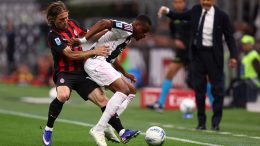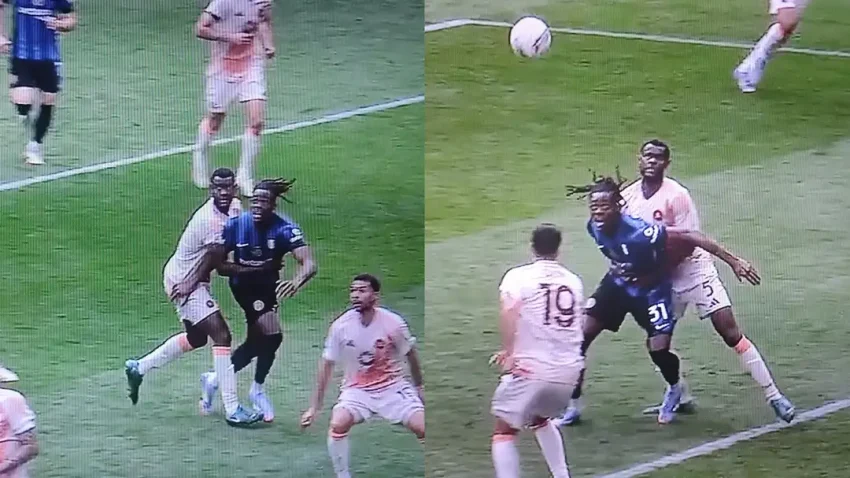
The investigation into Italian refereeing has widened again, with Milan prosecutors now reportedly examining what happened inside the VAR room during Inter Roma and the controversial penalty incident involving Evan Ndicka and Yann Bisseck.
Repubblica – La procura di Milano si riserva di acquisire al più presto i file audio e video originali dei minuti in Sala Var durante Inter-Roma e relativi al fallo di N'Dicka su Bisseck. Un ex arbitro, convocato più volte e per svariate ore di verbali riempiti, ha confermato che… pic.twitter.com/ayUnJBXY5O
— Daniele Mari (@marifcinter) April 29, 2026
According to reports from Italy, prosecutors want to verify witnesses’ claims about the silent check that followed the contact between Ndicka and Bisseck in the Roma penalty area. The match, played at San Siro on 27 April 2025 and won 1-0 by Roma, became one of the most debated fixtures of last season because Inter were not awarded a penalty in the closing stages.
The allegation now under scrutiny is not simply whether the decision was wrong, but whether the VAR process was improperly influenced. Reports claim that assistant VAR Marco Piccinini raised doubts about the incident with VAR official Marco Di Bello before supervisor Andrea Gervasoni allegedly knocked on the VAR room glass to discourage an on-field review. It is further alleged that Di Bello then told Piccinini to mind his own business. These claims remain allegations and have not yet been established by prosecutors.
The issue has become more serious because the phrase allegedly attributed to Di Bello and the alleged intervention by Gervasoni were not heard in the audio later broadcast on Open VAR. This discrepancy is now central to the matter, with prosecutors reportedly considering the acquisition of the original audio and video files from those minutes to compare them with what was eventually made public.
The case is part of the broader investigation led by Milan prosecutor Maurizio Ascione into the refereeing system. Inter Roma is not currently listed among the matches forming the formal charges, but investigators are reportedly trying to establish whether the episode reveals a wider pattern of interference or irregular management inside the VAR structure.

The matter also places Gervasoni under renewed attention. His interrogation is expected to be a key moment in the inquiry, especially as his name has already emerged in relation to other alleged VAR room incidents. Gianluca Rocchi, meanwhile, is reportedly not expected to appear before investigators, with his legal team indicating that the decision was taken by his lawyer.
For Italian football, the significance of this development is clear. This is no longer only about a missed penalty or a controversial VAR check. The real question is whether the VAR room operated with the independence required by protocol, or whether external pressure may have shaped decisions during a decisive Serie A match.
Until the original files are examined, the allegations remain unproven. But the fact that prosecutors are now looking at the raw material behind one of last season’s most disputed incidents marks another damaging chapter for the credibility of the Italian refereeing system.