The Queensland Government has decided to turn to private investment to fund the infrastructure for the Olympic and Paralympic Games, including the $3.7 billion (€2.27bn) main stadium, with the aim of containing public expenditure and attracting external capital through public-private partnerships.
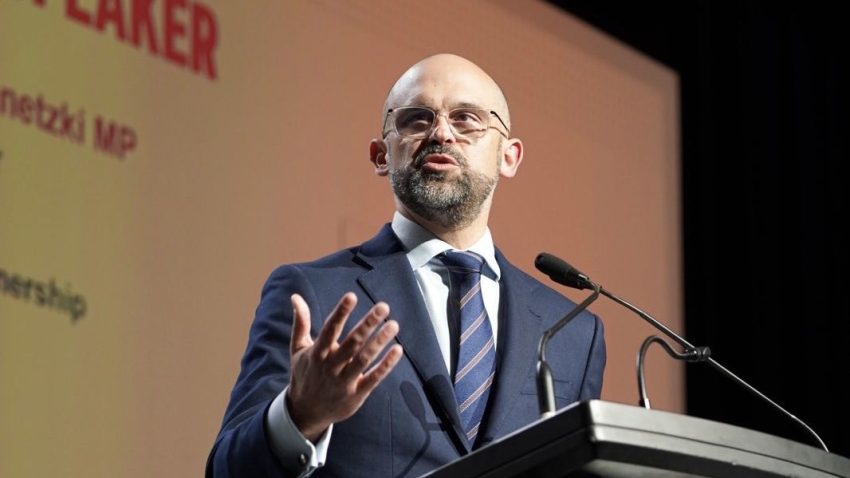
According to newspaper The Australian, the announcement was made this week by State Treasurer David Janetzki during a lunch hosted by the Committee for Economic Development of Australia. “I’ve tasked Queensland Treasury to establish a dedicated unit to attract private capital to help deliver infrastructure projects needed for a growing state,” the official declared. The measure represents a shift from the strategy of the previous Labor Government, which opposed business involvement in funding Olympic venues.
This new unit, which will begin operating on 1 August, will be responsible for exploring models that are attractive to private investors and beneficial to taxpayers, Janetzki explained. “Well-directed and efficient capital investment ultimately reduces operating costs over time, and it is important it is directed where it needs to go. We know capital goes where it’s welcome and stays where it is needed,” he added.
Plans for the Games include joint funding agreements for several key pieces of infrastructure. These include the Olympic stadium, which is planned to have a capacity of 63,000 seats in Victoria Park. There is also the aquatic centre, whose cost has been estimated at $650 millions (€400m) by Swimming Australia, although this figure has been questioned by industry sources and by the Games Independent Infrastructure and Coordination Authority, the body responsible for delivering the 2032 venues. In addition, the plan outlines other facilities such as the Brisbane Arena and the Athletes’ Village, which are essential for the development of the event.
Another project included in the investment package is the Brisbane Live Arena, a 17,000-seat concert venue valued at $2.5bn (€1.53bn), whose initial public funding could be replaced by a public-private partnership. Indeed, Deputy Premier Jarrod Bleijie recently stated that the facility will be built under this funding model, a declaration that consolidates the government’s change in strategy.
The Federal Government has not yet given the green light to these modifications. According to The Australian, Prime Minister Anthony Albanese has not signed off on the change that would affect the cost-sharing agreement initially struck with Queensland, potentially reigniting tensions between levels of government. Nevertheless, State Premier David Crisafulli insists that all projects must remain within the $7.1bn (€4.345bn) funding cap agreed with Canberra, which covers the flagship projects mentioned.
Beyond Olympic infrastructure, sources close to the Treasury indicated that the new model for attracting private capital could be extended to energy projects such as hydroelectric and gas plants. With this strategy, the government aims to make Queensland a reliable and attractive destination for private capital. In this context, the Brisbane 2032 Olympic Games seek not only to be a sporting milestone but also a profound shift in the way Australia envisions the funding of major events and state infrastructure.