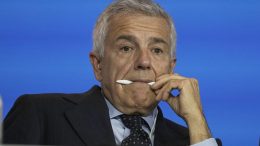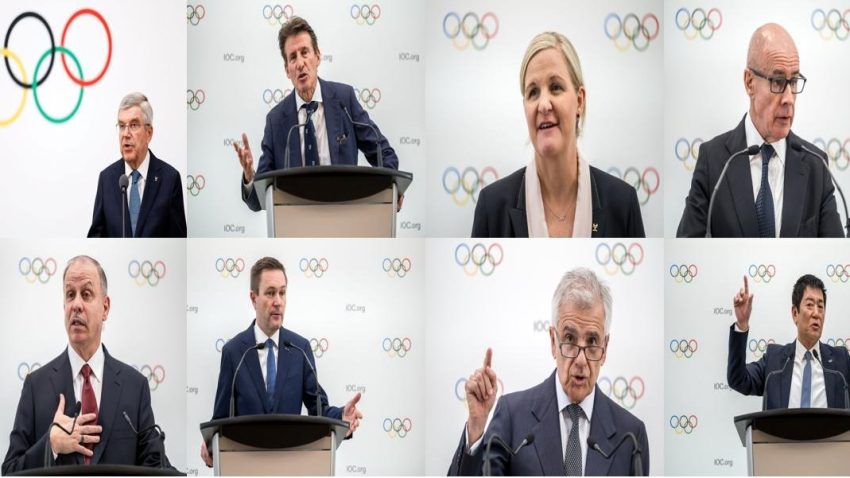
With just one week until the election to replace Thomas Bach, the seven contenders have made their positions clear: politically correct, evasive on sensitive issues and with significant differences that could redefine the future of the Olympic Movement.
After the president of the International Olympic Committee (IOC) announced at Paris 2024 that he would not be seeking re-election after 12 years at the helm of the world’s most prestigious sports institution, the succession of the 1976 Montreal Olympic fencing champion began to take shape. Bach was previously elected at the Buenos Aires Congress in 2013.
A considerable amount of time has passed since that day in the French capital, and the process leading up to the election of a new leader of the Olympic Movement has been marked by a number of significant events. The IOC will elect its 10th president at a meeting in Greece on March 20, marking the final stage in a countdown that will determine the future direction of Olympism for years to come.
Looking ahead to the new chief, who will take office in June 2025, the International Sports Press Association (AIPS) organised exclusive interviews with the seven candidates over the last two weeks, with Inside The Games involved through its member journalists. The interviews revealed both similarities and significant differences.
The virtual conferences, in which journalists from all continents had the opportunity to speak directly to the candidates, had one common denominator: the contenders focused primarily on presenting their manifestos and general ideas, without delving deeply into specific proposals.
Despite persistent questions seeking details on how they would implement their plans, most responses were vague or evasive, avoiding in-depth discussion of key issues. This was particularly evident in crucial areas such as inclusion, sustainability, views on war and its impact on sport, and adapting the Olympic Movement to the challenges of the 21st century.
However, there was also space for the candidates to express interesting and distinctive concepts. In general, they came across as dialogue-driven individuals, open to a more democratic and inclusive IOC in decision-making, more transparent and accessible to the media (not just those with rights or large historical corporate affiliations). Nevertheless, they also expressed their respect for history and conservative values, maintaining the guidelines to be followed, with the sustainability advocated by Bach as a banner to be continued.
Among the differences, several ideas emerged where each candidate placed more emphasis, such as decentralisation of the Olympic Games, sustainability and technology, focus on gender equality and inclusion, more participatory governance, continuity with evolution, support for developing countries, and integrity and well-being of athletes.
There were conflicting positions on e-sports. Johan Eliasch and Sebastian Coe called for caution in its inclusion in the Olympic Games, always respecting the Olympic values. Feisal, on the other hand, took a more open approach, highlighting its potential to attract new audiences, especially young people, as a way of modernising and extending the reach of the Games.
Common points between the candidates
During the 10 hours of combined conferences between all the candidates, they shared their visions of the challenges and opportunities that Olympism will face in the future, highlighting common points.
One of these was a firm stance against doping. All agreed on the need to continue the fight against this scourge that undermines the integrity of sport. Kirsty Coventry, Johan Eliasch and Feisal Al Hussein emphasised that the fight against doping should go beyond sanctions, promoting a preventive approach and strengthening cooperation with international organisations, such as Interpol.
Regarding the inclusion of women in sport, everyone expressed a strong commitment to work towards greater equality, not only in competition but also in governance. Coe, Morinari Watanabe and Juan Antonio Samaranch Jr. stressed the importance of ensuring that women have equal leadership opportunities within sports organisations, an issue that was also addressed at length by Feisal, who stressed the need for stronger global policies to reduce the gender gap.
Respect for the rights of transgender athletes was also a common theme. Although there were nuances in their responses, all agreed on the need to ensure that participation in sport is inclusive but also fair to women who may be affected. The idea of creating a regulatory framework that balances inclusion and fairness in competitions was a common point in almost all contributions.
All candidates mentioned sustainability as a key issue, but from different perspectives. Eliasch focused on the impact of climate change on winter sports, Watanabe on decentralisation to make the Games more accessible and Samaranch Jr. on continuing the line set by Bach with a more developed approach.
Most contenders, such as Eliasch, Samaranch Jr, Prince Feisal Al Hussein and Coe, have reiterated the importance of maintaining political neutrality within the IOC. They all agree that politics should not be involved in sport and that the Games must be a place of unity, not division.
Differences and innovative proposals from each candidate
Despite similarities in their commitment to advancing Olympism, the differences between the candidates for the IOC presidency are clear. Each has put forward innovative proposals and unique approaches to the challenges facing the Olympic movement. From decentralising the Games to integrating new technologies, the candidates’ visions reflect a wide range of possibilities for the future of Olympism.