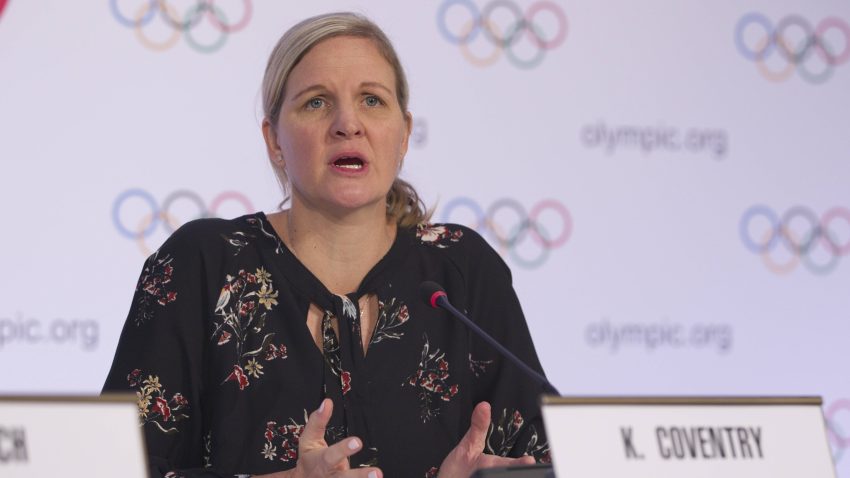
When Thomas Bach declared seven months ago that “new times are calling for new leaders,” few could have predicted that the next President of the International Olympic Committee (IOC) would be not only a woman but also an African. Yet, that is now a reality. On Thursday, 20 March 2025, during the 144th IOC Session held in Greece, Zimbabwean sporting icon Kirsty Coventry was elected President of the IOC—an unprecedented milestone.
Her victory stunned many across Africa. “It’s massive for her to become the first woman and first African to achieve this. We’re still in shock,” said Mehluli Sibanda, President of the Zimbabwean National Sport Press Association. “She was a dark horse. Everyone expected Seb Coe or Juan Antonio Samaranch to win, so her success was a huge surprise.”
That sentiment was echoed in Sudan. “Honestly, I didn’t expect Kirsty Coventry to win,” said Sudanese sports journalist Mohamed Mufti, who has covered four Olympic Games. “There were many candidates, and she was the youngest and the only woman among them.” Despite being forced into exile due to war in his country, Mufti continues to closely follow developments in the Olympic movement.
In Senegal, the reaction was similar. “I thought she had a chance when I heard her programme, but being elected in the first round? That still surprises me,” said Mamadou Koumé, veteran sports journalist and former president of Senegal’s national sports press association.
Yet not everyone was caught off guard. Nigerian journalist and former AIPS Africa president Mitchell Obi had long seen potential in Coventry. “Can an African woman change the old narrative in the IOC?” he asked before the vote. “Who would bet against the youngest and most decorated African Olympian stepping into the world’s biggest sports job?” Obi viewed Coventry and Samaranch as representing the future and believed the women’s agenda in sport could significantly influence the outcome. However, even he didn’t foresee a first-round victory, predicting instead a second-round showdown.
In the end, Coventry defied expectations, winning 49 votes and finishing well ahead of her closest rival. At just 41 years old, the former Olympic swimmer has become the first African woman to lead a major global sports organisation—an accomplishment celebrated across the continent.
From Harare to Casablanca, Kigali to Cotonou, her victory was seen as a symbol of pride and progress. “Her rise is an inspiration for the younger generations, especially young girls, who now see her as a model of leadership and success,” said Félix Peperipe, a leading sports journalist from Benin. “Africa congratulates her and stands with her as she begins this historic journey.”
Mamadou Koumé believes this moment marks a turning point for African sport. “This is good news for the continent and for African women in sport. Her election will boost confidence in the African sporting movement, which likely played a role in her victory.”
Mouhamed Diop, President of Africa Aquatics and himself a former swimmer, also praised Coventry’s achievement. “As an African and as a swimmer, I am particularly proud. This is a great source of pride for African swimming and a recognition of her incredible career.”
Beyond continental pride, Coventry’s election represents a global shift. According to Mufti, it is a significant step toward gender equality and a move towards embracing younger leadership. Mitchell Obi added, “Her win breaks with convention. A first-round victory was a stunner, and it signals a new era for the Olympic movement. The IOC has now set a precedent that could inspire change even within AIPS.”
Koumé echoed that sentiment, calling her election a refreshing change. “Her youth and experience should serve her well. I believe she’ll lead the IOC effectively.”
Coventry’s historic win is more than symbolic—it’s a powerful signal that women are increasingly taking centre stage in global sport leadership. “This changes the game,” said Obi. “International federations will now feel more encouraged to give women a chance at the top.”
As a double Olympic champion and holder of seven medals, Coventry has long exemplified excellence, determination, and fair play. She has remained active in the Olympic movement since retiring from competitive swimming, and has balanced her professional commitments with her roles as a mother and wife.
“Kirsty was underestimated, but she found her stride during the campaign,” noted Obi. “Though the youngest candidate, her views were grounded. She never shied away from her beliefs and remained firm, even on sensitive topics like gender identity in sport.”
Her presidency is also seen as a beacon of hope for women in sport. “We expect her to advocate for more opportunities for women and to ensure the world’s best athletes are showcased at the Olympics,” said Sibanda. “We also hope to see more women appointed to key positions within the IOC.”
Still, the road ahead will be challenging. “The list of issues she must tackle is long,” said Peperipe. “From gender equality and anti-doping to infrastructure development in emerging nations and maintaining Olympic values globally.”
Koumé added that Coventry will need to carefully manage the participation of athletes from politically troubled nations. Sibanda highlighted other pressing matters, including the LA28 Games, the ongoing debate on transgender participation, and the unresolved situation involving Ukraine, Russia, and Belarus. “It won’t be easy. But now that she’s been elected, she must stand firm and ensure her vision is realised.”
As Coventry prepares to lead the Olympic movement into a new era, Africa stands proudly behind her—hopeful, inspired, and ready to support one of its own on the world’s biggest sporting stage.