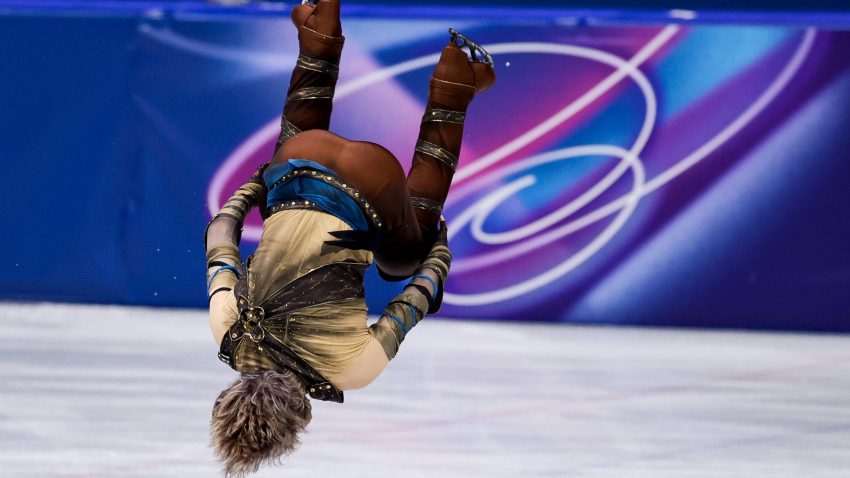
Ilja Malinin has reintroduced one of figure skating’s most spectacular and controversial elements to the Olympic stage, performing a backflip on ice and helping the United States secure team gold while reigniting global debate about artistry and risk in the sport.
The American star stunned spectators with a one-skate backflip during the Olympic team event, a move banned for decades before being relegalised in 2024. His performance not only energised the arena but symbolised the return of showmanship rarely seen in competitive figure skating.
Greatness recognising greatness 🐐
— TNT Sports (@tntsports) February 9, 2026
Novak Djokovic couldn’t believe what he was watching from Ilia Malinin 🤯 pic.twitter.com/CFnpa9eKMi
The backflip is not an innovation. It first appeared at the Winter Olympics in 1976 when American skater Terry Kubicka performed it at Innsbruck. Although there was no rule forbidding it at the time, judges were uncertain how to score the daring element, and Kubicka finished seventh despite the impact of his performance.
Soon after, the International Skating Federation banned the move, citing safety concerns and prohibiting jumps involving horizontal rotation. For decades, the backflip was confined to exhibition performances and ice shows rather than medal events.
— nataly ⊬ (@sftchlorine) February 8, 2026
The element resurfaced briefly in Olympic competition through acts of defiance, most notably by French skater Surya Bonaly at the 1998 Nagano Games. Returning from injury and frustrated by years of perceived judging bias, Bonaly performed a one skate backflip in her free programme despite knowing it was illegal, receiving a penalty but earning admiration from fans worldwide.
Her action became a powerful symbol of rebellion and individuality in a sport often criticised for rigid standards and conservative judging.
Landing a backflip on one blade 😱
— TNT Sports (@tntsports) January 1, 2026
Surya Bonaly performed this in Nagano 1998 and she remains the only athlete to perform this move in an Olympic Competition ✨ pic.twitter.com/JhtWkZ4pbf
Nearly three decades after Bonaly’s protest, the backflip was officially permitted again from November 2024. However, it remains a choreographic element rather than a scoring jump, meaning it carries no base technical value and cannot be used as a required element.
Skaters may still include it for artistic impact, and Malinin seized the opportunity on the Olympic stage. His execution appeared effortless and electrified the crowd, with even high-profile spectators in attendance visibly amazed by the performance.
“It was fun,” Malinin said afterwards. “The audience was really screaming and totally out of control. I felt their gratitude.”
Malinin’s decision to include the backflip may have boosted his artistic impression scores and contributed to the United States claiming gold in the team event. Known for pushing technical boundaries, including his ability to land the quadruple Axel, he remains among the favourites for individual honours despite strong competition from Japan’s Yuma Kagiyama and Shun Sato.
Regardless of final medal outcomes, Malinin’s performance has already left a lasting mark. The return of the backflip highlights figure skating’s evolving balance between athletic difficulty and entertainment value, with audiences responding enthusiastically to its revival.
Nearly 50 years after its Olympic debut, the once forbidden move has found its way back into the spotlight, reminding the skating world that innovation and spectacle remain central to the sport’s appeal.