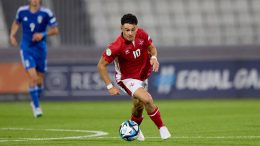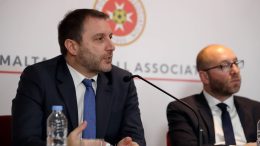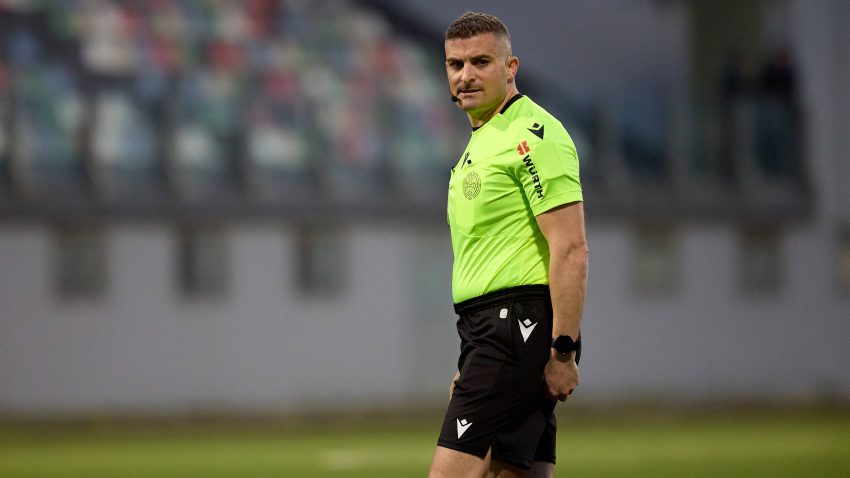
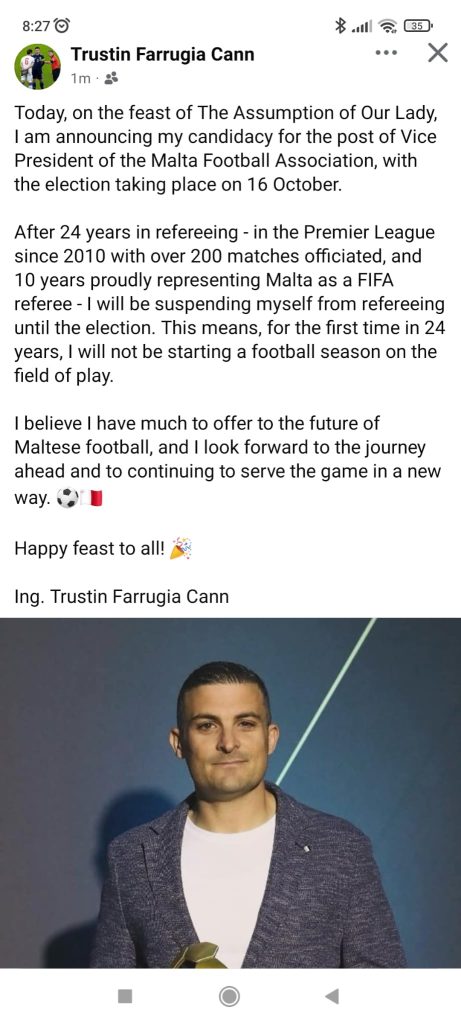
Active FIFA referee and Malta Football Referees Association president, Trustin Farrugia Cann, has thrust himself into the centre of Maltese football politics by declaring, via social media, that he will contest the post of Vice President of the Malta Football Association on 16 October. It is an unprecedented step for a currently active match official and one that immediately blurs the line between the technical and political spheres of the game.
Speaking to Malta Sport earlier this week, Farrugia Cann confirmed his candidacy and that he will not be refereeing for the time being. Whether he will continue at the local and international level in the longer term remains to be determined. The pause helps with optics, but it does not resolve the deeper questions about influence, proximity to power and potential conflicts that accompany his candidacy.
His move follows statutory changes approved at the Football Association’s most recent Annual General Meeting. Article 27 on elections was amended to remove the requirement that one of the Vice President roles must be filled by a female candidate. A related textual change to Article 34 on the composition of the Executive Board deleted the phrase “at least one of which shall be female.” The timing is hard to ignore. A gatekeeping clause disappears, and within months, an active international referee steps forward for high office.
For supporters, Farrugia Cann’s 24-year résumé with more than 200 Premier League matches since 2010 and a decade as a FIFA-listed official offers rare technical insight at the board level, particularly on integrity, officiating development and competition standards. They argue that elevating a seasoned referee could professionalise decision-making and accelerate reforms.
Critics, however, see red flags. Can a figure who has shaped matches and, as referees’ association president, advocated for officials’ interests, now campaign for a role that influences competitions, appointments and policy? Even with self-suspension during the campaign, there is a perception problem. One can only ask what conversations were held and what networking took place with club delegates before his announcement, and whether explicit or implied were offered about future structures, resources or priorities that might tilt the race.
There is also the question of representation. Removing guaranteed female presence at the vice-presidential level risks shrinking women’s influence unless the Football Association sets out firm, transparent measures to safeguard diversity in leadership. Absent that clarity, the optics of this candidacy will continue to provoke debate.
Ultimately, this bid is a stress test for Maltese football governance. Clear recusal protocols, transparent commitments on diversity and a published roadmap for managing conflicts of interest will be needed to reassure stakeholders that insider advantage is not the price of experience. Until then, Farrugia Cann’s campaign ensures that refereeing and the relationships built over the years on the touchline will be on trial alongside the candidate when clubs cast their votes in October.