Even during the festive period and outside competitive action, athletes are being reminded that vigilance over substance use remains essential, as anti-doping testing continues both in and out of competition. The warning comes amid recent cases in Maltese sport which underline how easily athletes can fall foul of regulations, even during periods commonly viewed as downtime.
According to reporting by Times of Malta Sports Desk, two rowers and a football goalkeeper have been temporarily suspended after failing doping tests. Birżebbuġa rower Kevin Camilleri and Marsamxett rower Leon Vella both tested positive for a performance-enhancing substance during the Victory Day Regatta held last September and were handed provisional suspensions. The report also confirmed that Żebbuġ Rangers goalkeeper Jamie Azzopardi failed a doping test following a BOV Challenge League match against Swieqi United played in November and has likewise been temporarily suspended pending further investigation.
Dr Sandro Camilleri, Director of Integrity at the Authority for Integrity in Maltese Sport (AIMS), confirmed the cases while speaking to Times of Malta. “I can confirm that in recent weeks, two rowers and a football player have tested positive following anti-doping tests,” Dr Camilleri was quoted as saying. He explained that since taking office alongside AIMS Chief Executive Officer Kevin Azzopardi, the authority has intensified its work through the National Anti-Doping department, increasing the number of tests carried out across a wide range of sporting disciplines.
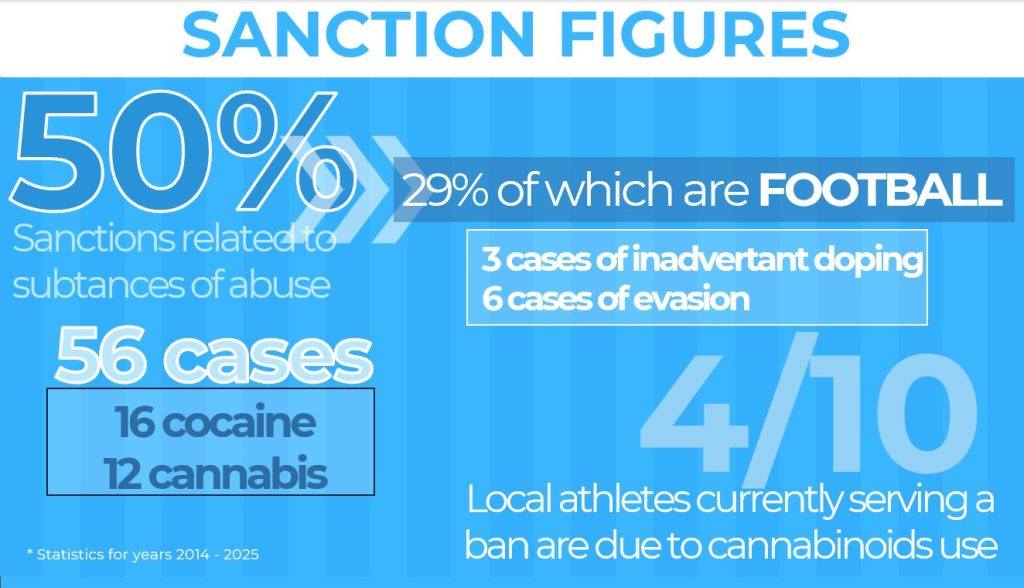
Dr Camilleri also cautioned that further positive cases could emerge. “Given the volume of work and tests conducted, I would not be surprised if more athletes are found to have tested positive,” he said, adding that doping is one of the main focus areas for the authority moving forward. According to AIMS statistics, Malta recorded 45 Anti-Doping Rule Violations between 2014 and 2024, a figure which highlights the scale of the issue despite growing awareness and education efforts.
Under World Anti-Doping Agency regulations, athletes are subject to testing at any time, regardless of whether they are actively competing. Out-of-competition testing is a key pillar of anti-doping programmes and applies equally during the festive season, off-season periods and training breaks. A common misconception among athletes is that substances consumed during holidays or non-competitive phases will clear the body before testing resumes. In reality, detection times vary widely and are influenced by the type of substance, dosage, frequency of use and individual metabolism.
Public health guidance on drugs.ie indicates that many substances can remain detectable for far longer than athletes expect. Alcohol may be detected in urine for several days, while stimulants such as amphetamines and MDMA can remain traceable for multiple days, depending on usage. Benzodiazepines are particularly problematic due to their long detection window, which can extend to several weeks in urine. Cannabis also presents a high risk, with metabolites detectable for weeks, especially in regular users. These indicative timeframes underline a crucial reality for athletes: there is no guaranteed safe window in which substance use can be assumed to be risk-free.
Beyond recreational drugs, supplement use continues to pose one of the greatest risks to clean athletes. Studies referenced by anti-doping authorities show that between 40 and 70 per cent of athletes use supplements, while between 12 and 58 per cent of supplements may contain prohibited substances. This contamination often occurs due to poor manufacturing practices, cross-contamination or misleading labelling, exposing athletes to accidental or inadvertent doping.
Under the principle of strict liability, athletes are fully responsible for any prohibited substance found in their system, regardless of intent. Claims of ignorance, reliance on advice or unintentional ingestion through supplements do not remove responsibility or prevent sanctions. For this reason, anti-doping bodies consistently advise athletes to exercise extreme caution when considering supplement use and to seek professional medical guidance.
Dr Camilleri confirmed that AIMS is also focusing on cases where banned athletes may be found participating in sport in other roles, including as players or officials. “Our message is clear: we want Maltese sport to be free from any form of abuse, and we will do everything in our power to protect the integrity of sport,” he said in comments reported by Times of Malta.
As testing activity continues to increase across Maltese sport, the message to athletes is clear. Education, awareness and personal responsibility remain the strongest defences against doping violations. Whether in peak competition or enjoying a festive break, athletes must remember that choices made away from the pitch, track or pool can still carry serious sporting consequences.
For further information regarding Anti-doping regulations, refer to www.aims.org.mt. Athletes have a dedicated corner where they may check medications and supplements they take and even lodge a report.