Allegations of abuse and unethical practices within Maltese youth football continue to mount, following further revelations aired on National television sports programme Il-Kampjonat. The issue, first brought to public attention by former national team coach Pippo Psaila, has since developed into a major controversy, raising serious concerns about safeguarding within local football structures.
In a recent edition of the programme, broadcast on Monday 8 April, sports psychologist and senior lecturer at the University of Malta, Dr Adele Muscat, appeared in the studio to discuss her research into mistreatment and exploitation in youth football. Dr Muscat confirmed that the findings of her study had been formally submitted to the Malta Football Players Association and the Malta Football Association. Her objective, she explained, was to support meaningful reform and shed light on what she described as widespread psychological and emotional harm occurring within football nurseries and clubs.
This latest development follows an earlier broadcast of Il-Kampjonat in which Mosta FC President George Galea made controversial and deeply unsettling claims about the conduct of certain parents. Speaking live on air, Galea alleged that some mothers engage in sexual relationships with coaches to secure playing time for their sons. The remarks provoked immediate criticism from the public and figures within the sporting community, many of whom were shocked by the statement’s content and frankness.
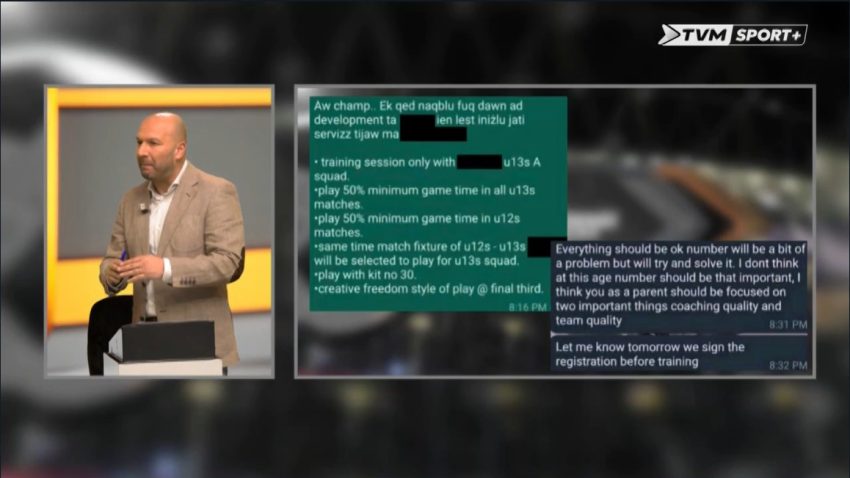
Journalist and programme presenter Antvin Monseigneur added weight to the claims by presenting what he described as corroborating evidence. This included a conversation allegedly between a parent and a coach negotiating a form of exchange for team selection. Also presented were two contracts involving minor players, reportedly signed by a club president and secretary, raising serious legal and ethical questions surrounding the handling of underage athletes.

The Malta Football Association has so far remained silent on the matter, as have the safeguarding authorities within the Youth Football Association. Their absence from public discourse is increasingly drawing criticism, with many questioning why the governing bodies have yet to respond to either the allegations or the findings of Dr Muscat’s research.
Calls for urgent action are growing louder, particularly from those who work closely with young players and their families. Advocates warn that continued inaction risks not only damaging Malta’s footballing reputation but, more critically, compromising the well-being of the children involved.
What began as a single interview with a former national coach has evolved into a national reckoning with the darker side of grassroots football in Malta. The pressing question now is not only how such practices were allowed to occur, but how long those in positions of responsibility will wait before they intervene.