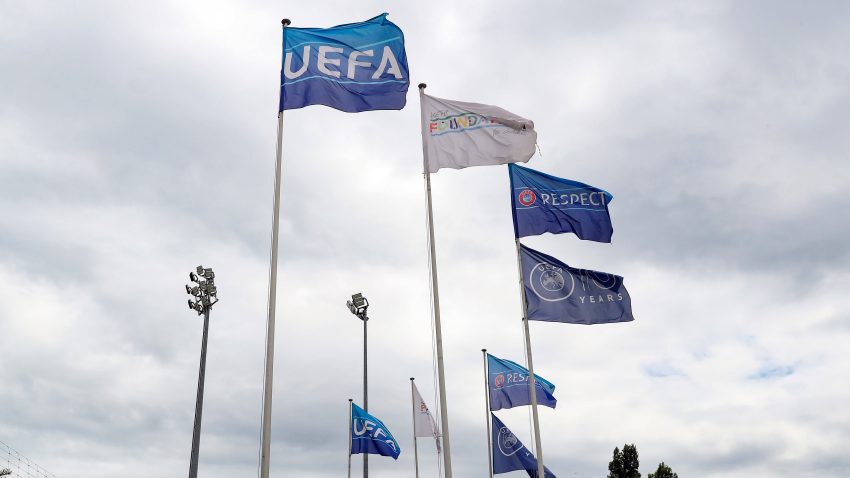
European football has taken a significant step toward reshaping the future of the transfer system after UEFA, the European Football Clubs, the European Leagues and FIFPRO Europe jointly endorsed a comprehensive resolution outlining the key principles that should guide upcoming reforms. The agreement was reached within the EU Sectoral Social Dialogue Committee for Professional Football, under the auspices of the European Commission, and marks one of the most unified and structured reform efforts the sport has seen in recent years.
The recognised European social partners in professional football, and @UEFA as the Chair, have agreed a joint resolution on the key principles guiding the future of the transfer system.
— FIFPRO (@FIFPRO) December 1, 2025
✍️ #FIFPRO Europe
✍️ @EFC_Football
✍️ @EuropeanLeagues
For decades, the transfer system has served as a cornerstone of both the European and global football economy. Regulated by FIFA’s Regulations on the Status and Transfer of Players, it has played an important redistributive role by channelling funds from top clubs to training centres, youth academies and grassroots structures. However, the European Court of Justice’s ruling in the Diarra case in October 2024 challenged several provisions within FIFA’s framework, forcing the introduction of an interim regulatory system and opening a wider debate on how the rules should evolve to comply with EU law and with the modern realities of the game. Stakeholders now see this moment as an opportunity to build a transfer model that is fairer, more sustainable and legally robust.
Europe remains the centre of the global transfer market, accounting for almost 90 per cent of worldwide transfer fees and the majority of international player movements. UEFA and the social partners therefore stressed that any future reform must be fully aligned with EU law and preserve the distinctive features of European club football, including its pyramidal structure, the importance of youth development and the collective governance model. They underlined that reform should not result in a patchwork of different national regimes but must deliver stability and legal certainty across borders. With the European Commission supporting the process and the European Parliament having recently called for a transparent and fair transfer system that respects athletes’ rights, there is strong political backing for a European-led contribution to global reform.
In their joint resolution, the parties identified several core principles that should guide the ongoing revision of FIFA’s regulations. Contractual stability must remain a foundation of the system, providing both clubs and players with security and enabling long-term investment in youth development. Redistributive mechanisms such as training compensation and solidarity payments should not merely be preserved but strengthened, ensuring that clubs which invest in talent formation are properly rewarded. At the same time, any new rules must balance the legitimate interests of clubs with the individual rights and freedom of movement of players, guaranteeing fairness, proportionality and clarity.
The social partners also emphasised that the regime governing the termination of contracts needs to ensure predictable and fair compensation. The concept of liquidated damages or penalty clauses may offer a viable solution, so long as it is applied in a fair and non-abusive manner. Where such clauses do not exist, calculation methods must still provide adequate compensation and support contractual stability without creating abusive situations. Sporting sanctions for termination without just cause should remain part of the system, but they must be progressive and proportionate.
Crucially, the resolution defends the role of the FIFA Dispute Resolution Chamber as a central mechanism for independent, time-efficient and affordable access to justice, while encouraging the strengthening of National Dispute Resolution Chambers across Europe. These national bodies should operate with independence, equal representation and respect for FIFA principles and EU law, reducing the need for unnecessary escalation to the international level. At the same time, the partners expressed caution regarding any idea of using an algorithm to calculate compensation, warning that such a tool would carry significant risks and would require detailed negotiations with social partners from the outset.
The statement also reiterates that the International Transfer Certificate process should never become an obstacle to a player’s right to work or a club’s ability to register and field a player. The issuing of a certificate must remain a simple administrative formality, delivered without delay and within a reasonable time frame.
Looking ahead, the EU Social Dialogue Committee will continue to work on several structural issues that are particularly relevant in Europe. Training compensation and solidarity payments, which have not been revised since 2001, no longer reflect the real costs and risks borne by training clubs. Stakeholders will study how to update these mechanisms to increase fairness and consistency, reduce administrative burdens and disputes, raise amounts to meet current realities and reinforce incentives for sustainable youth development.
Another priority area concerns the protection and career pathways of under-18 players. Any reform involving minors must balance their protection as children with their progression as young professionals, while also safeguarding the financial sustainability of youth development systems. The committee will assess how existing rules function in practice and whether adjustments are necessary to strengthen the well-being and rights of young players and the viability of training models across Europe.
Strengthening national dispute resolution structures will also remain a central focus, given their importance for contractual stability, access to justice and the coherence of the overall system. Better functioning national chambers can resolve conflicts more quickly and fairly, reducing pressure on international bodies and enhancing confidence in the regulatory framework.
The resolution will now be transmitted to FIFA to inform and influence the global reform process. The EU Social Dialogue Committee will continue its structured discussions to develop concrete, jointly agreed proposals based on the principles set out in this text, and the European Commission is invited to support efforts to provide long-term regulatory stability and legal certainty.
In closing, UEFA and the social partners reiterated their shared commitment to a transfer system that is stable, fair, sustainable and legally sound. Their common vision is of a model that protects players’ rights, supports clubs’ short and long-term investment strategies, strengthens the redistributive effect of transfers and upholds the integrity and competitiveness of European football. This joint resolution marks an important milestone, signalling that Europe’s key football stakeholders are ready to shape the next generation of the transfer system and ensure it remains credible and fit for the future.